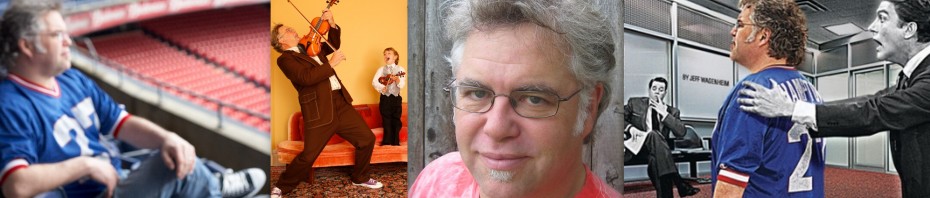
 For the first dozen years after Sarah and I moved out here to the Happy Valley of western Massachusetts, I hosted a music program on WMUA, the listener-supported FM station at the University of Massachusetts in Amherst. On the air, I was known as “Daddy Wags.”
The type of show I did changed over the years. I started out with a weekday afternoon world music show called All Over the Map, then moved to an early morning show of eclectic music called Rude Awakenings, then an oddball late night show called Strange Bedfellows. That last one was the longest-running and most fun, because I mixed night music — moody jazz, avant garde contemporary classical, some darker rock and other oddities — with all sorts of spoken word sprinkled in, from poetry to comedy, political ranting to old-time radio rambling. A key part of the show’s appeal was the weekly hour-long segment devoted to the radio collage work of Joe Frank, drawn from his archives of hundreds of hours of programs for NPR. It’s hard to describe Joe’s work, other than to say that if you’re alone in your car late at night and happen to stumble upon it while flipping through stations, you’ll want to stick around . . . and if your signal starts to fade before his hour is done, you’ll probably pull into a rest stop to catch the rest. It fit perfectly with Strange Bedfellows, and hosting the show was a lot of fun.
My final stint at WMUA was taking over as host of one of the station’s longest-running and most popular shows, a Sunday afternoon foray into American roots music called Country, Blues & Bluegrass. The show was on the air for more than 40 years (with many, many other hosts before me) and had quite the devoted following. You can probably guess some of the music I played, although country, blues and bluegrass were only part of the story. You also would have heard Cajun and zydeco, Tejano and other Texas border music, any other American music that’s too gritty to be pop.
But CB&B is no more, after the undergrads who ran the station decided to do away with the community shows that for years had made up about half of the programming. That turned WMUA into a wasteland of vanilla programming with no listenership. I’m not sure what it sounds like today.
 My wife, Sarah Swersey, plays the flute. She plays it very well. She’s performed all over the world, including seven years as principal flutist for an orchestra in Spain. Once we set down roots in the Happy Valley, she became one half of Dúo Fusión, along with guitarist extraordinaire Joe Belmont. Sarah’s background is in classical music, Joe’s in jazz and other styles, and together they explored all corners of the musical map — from J.S. Bach to Astor Piazzolla, Miles Davis to Gabriel Fauré, Celtic jig to Andes folk song to surf guitar frenzy. Where did I fit in? I was the unofficial manager/publicist, keeping their website updated and writing their promotional materials. Have you heard Dúo Fusión? If not, you owe it to yourself to check out the music.








 Jeff Wagenheim